


Press Release
The Romanian-American University, in partnership with OAMGMAMR, opens the debate on the future of the nursing profession and introduces its new School of Medical Sciences
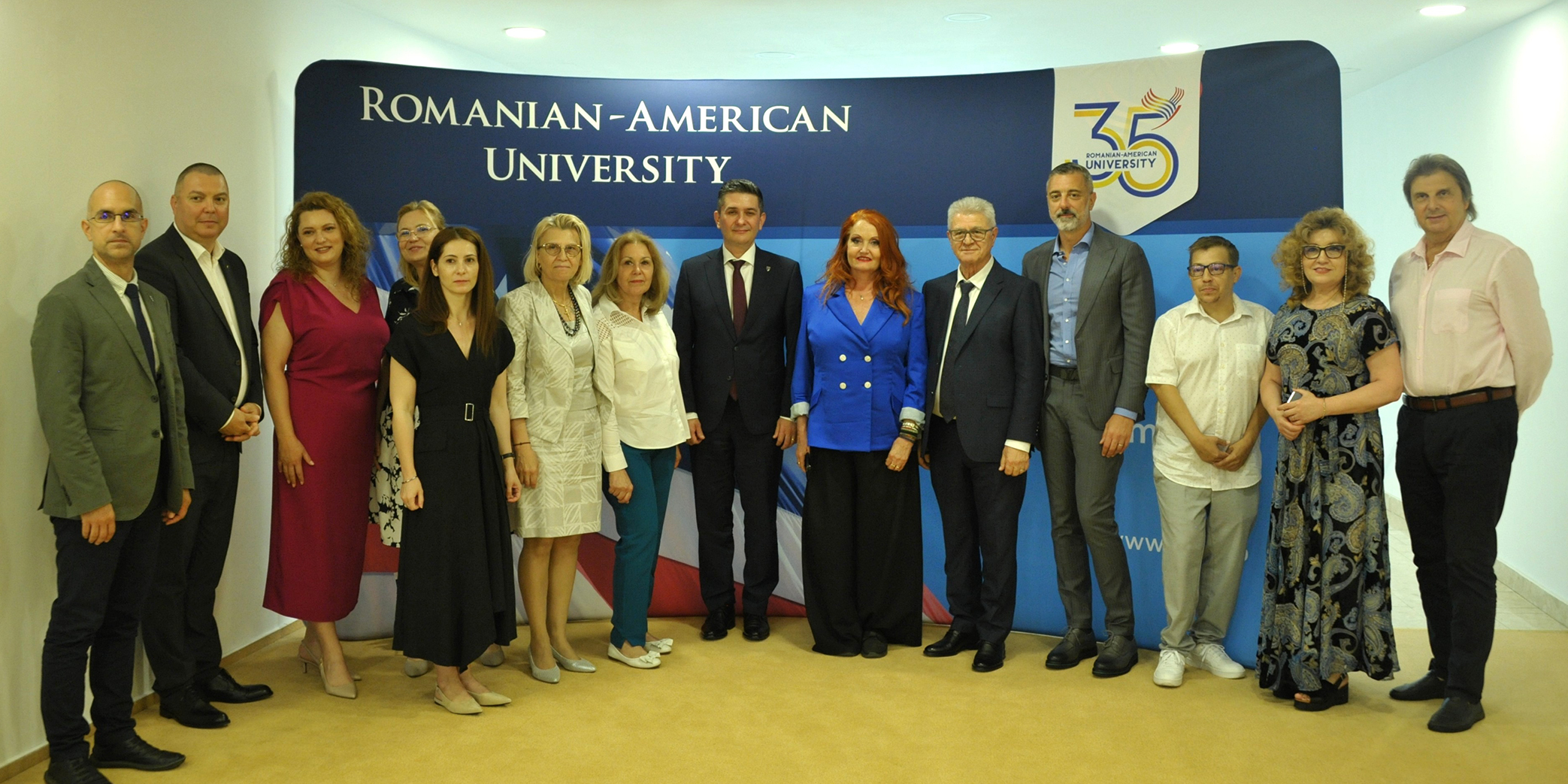
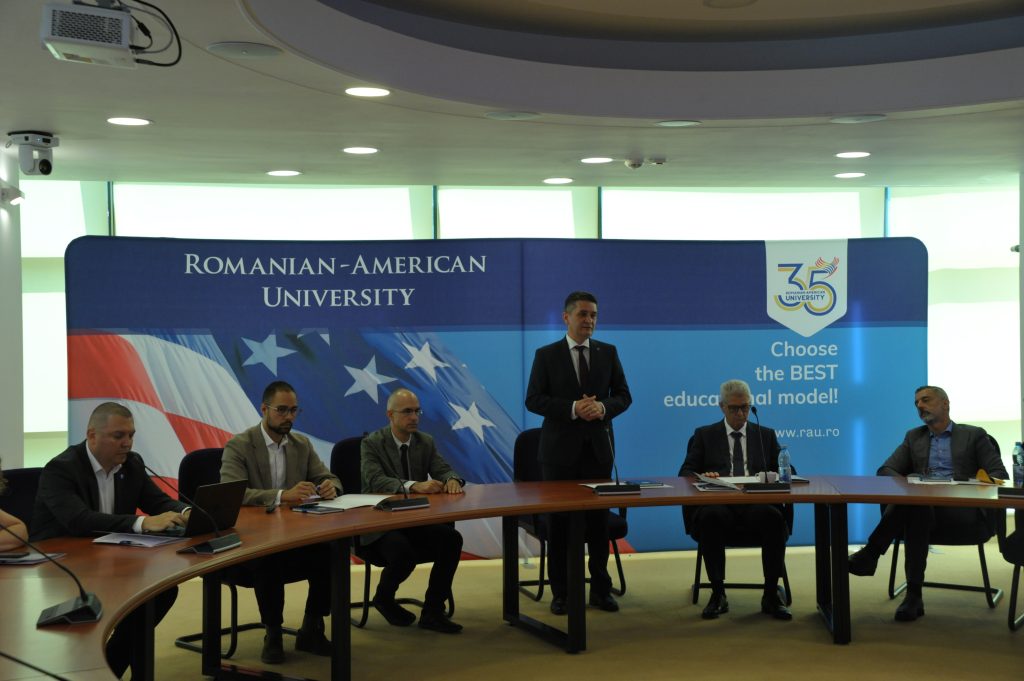
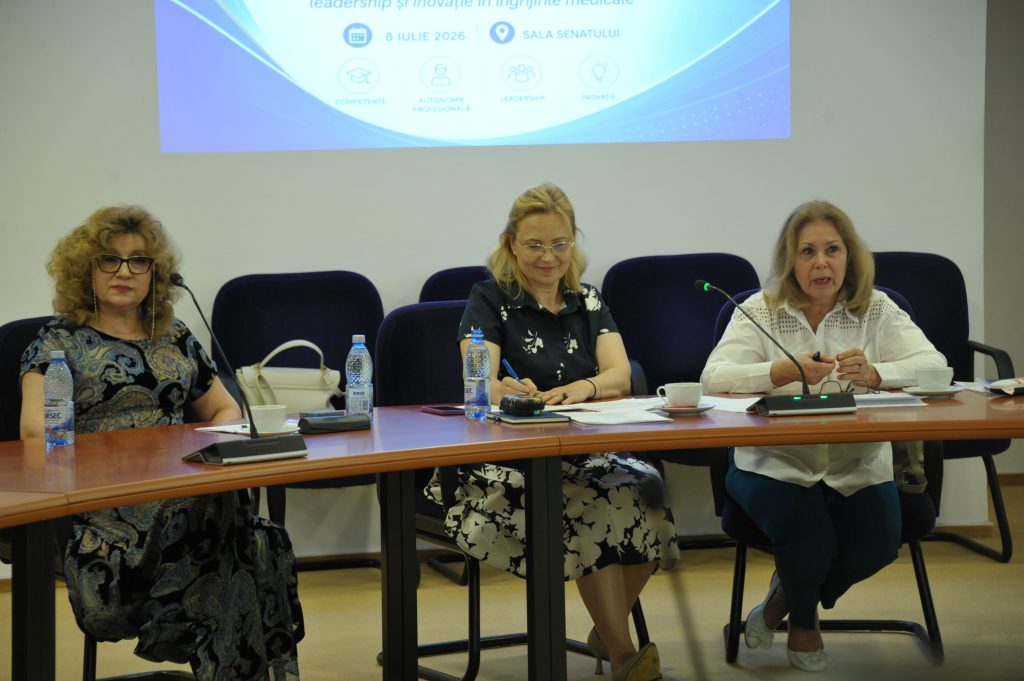
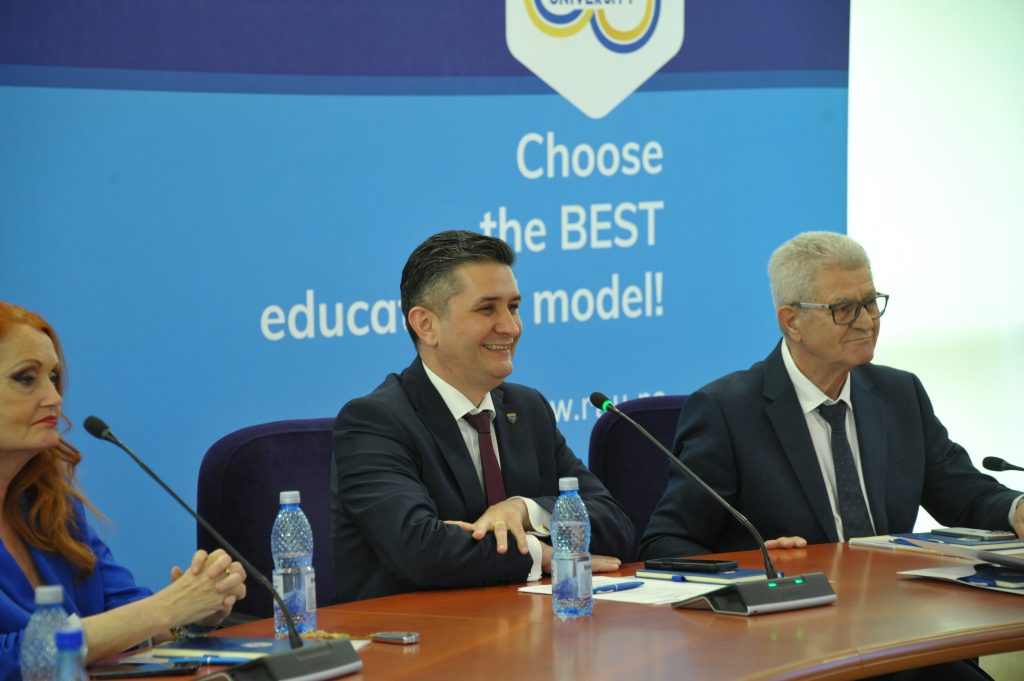
The Romanian-American University hosted the conference “The Nurse of the Future: Competencies, Professional Autonomy, Leadership, and Innovation in Healthcare.” Organized in partnership with the Order of General Nurses, Midwives and Nurses of Romania (OAMGMAMR), the event brought together leaders from the medical community, representatives of patient associations, and academic experts for an open dialogue on one of the Romanian healthcare system’s most pressing challenges: human resource management in the nursing profession.
During the event, the Romanian-American University presented its new strategic direction in healthcare education by announcing the establishment of the School of Medical Sciences, which will offer a four-year Bachelor’s degree program in General Nursing.
The discussions were moderated by Mariana Zazu, Head of the Research and Innovation Department at OAMGMAMR, whose contribution was instrumental in introducing the key topics and guiding the interactive dialogue. Through her interventions, Mariana Zazu structured the debate around the agenda’s central themes — the evolving role of nurses, the increasing complexity of healthcare delivery, and the impact of technology — successfully bridging rigorous statistical evidence with the realities of clinical practice.
Mircea Timofte, President of OAMGMAMR, stated: “European healthcare systems are placing an increasing emphasis on advanced competencies and the independent practice of nurses, principles that have already been incorporated into Romanian legislation. As the population ages and chronic diseases become more prevalent, many conditions can be managed effectively through home-based care. In countries such as Spain and Italy, nurses are already authorized to prescribe certain medications under established medical protocols. The establishment of this School within the Romanian-American University is an outstanding initiative that can help address the shortcomings of the current post-secondary nursing education system. As strategic partners, our next step will be to develop postgraduate programs specifically designed for these future university graduates.”
The discussions were launched with a comprehensive overview of Romania’s healthcare workforce, presented by Dr. Teodor Cristian Blidaru based on findings from the PERFORM National Study (2026). The data reveal that 86.6% of Romanian nurses hold post-secondary vocational qualifications, as post-secondary education remains the predominant training pathway, despite European reforms calling for the full integration of nursing education into higher education. This reality explains a significant discrepancy in international statistics. Eurostat reports only nurses with higher education qualifications, artificially placing Romania at a symbolic density of 92 nurses per 100,000 inhabitants, whereas the country’s actual overall nursing workforce density is 893 per 100,000 inhabitants, a figure that is very close to the European Union average.
The analysis also raises serious concerns regarding retention policies in a profession that is predominantly female (84% women). While today’s workforce will gradually approach retirement age over the next 10 to 15 years, the healthcare system’s greatest losses are currently structural rather than demographic. In 2025, 57% of nurses leaving the profession were under the age of 40, up from 48% in 2022. These findings demonstrate that retention policies must urgently focus on younger professionals by improving working conditions, organizational culture, and career development opportunities—going far beyond salary increases alone.
In direct response to this context, the Romanian-American University’s initiative addresses a strong demand for reform expressed from within the profession itself. Among the 2,671 nurses surveyed, 78.7% stated that new or updated specialization programs are needed, while only 52.5% considered the current programs to be adequately aligned with clinical practice. The study clearly shows that the primary obstacle is not a lack of professional motivation, but financial barriers, with 73.2% of respondents citing lost income or training costs as the main reason for not pursuing further specialization. According to the experts surveyed, the country’s highest priority is the development of emergency nursing (Emergency Department/Emergency Receiving Unit – ED/ERU).
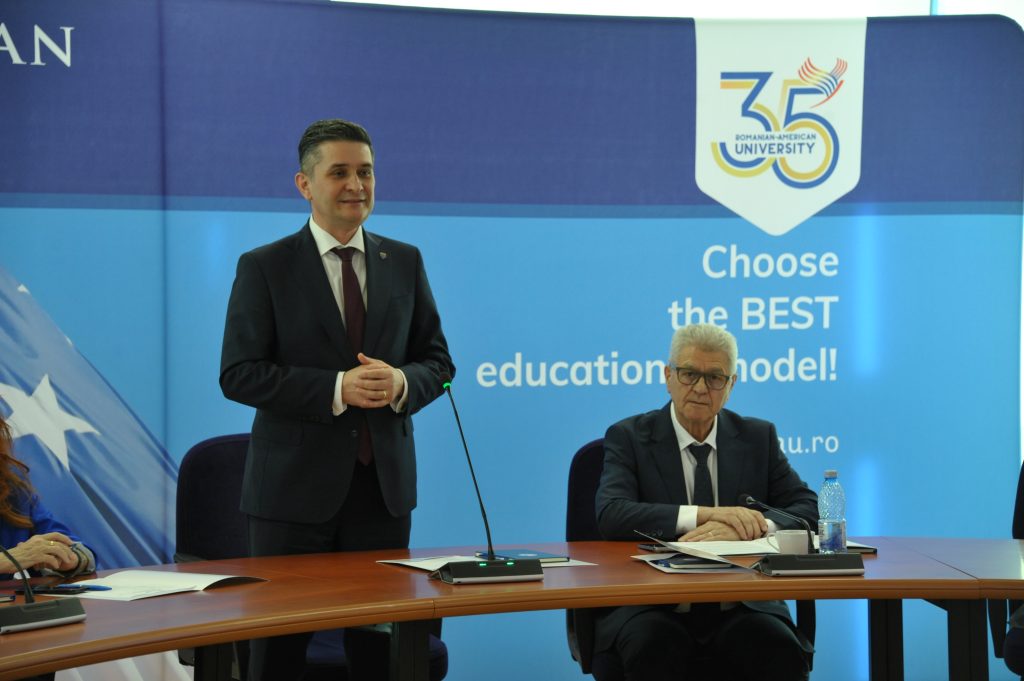
Costel Negricea, Ph.D. Habil. Professor, Rector of the Romanian-American University, stated: “The School of Medical Sciences marks an important milestone in the development of the Romanian-American University and reflects our commitment to addressing society’s real needs through relevant, future-oriented academic programs. Our goal is to educate competent, responsible professionals who are prepared to contribute meaningfully to the development of Romania’s healthcare system. Society is built by people, and the impact of what we accomplish through education today will be reflected directly in the future. Private higher education is a driving force for excellence in every developed country, and through the academic experience we offer our students, viewed from a medium- and long-term perspective, we are committed to building an educational environment that is closely aligned with international standards.”
The debate also highlighted another fundamental principle with the potential to transform the quality of nursing education: future nurses should be taught by experienced nurses who have become university educators. Participants emphasized that raising the standards of future generations requires these nurse educators to receive dedicated university and postgraduate training designed to strengthen their teaching abilities, professional competencies, and academic qualifications. In this context, Professor Crin Marcean, representative of the “Fundeni” Post-Secondary Healthcare School, referred to the classical principles of nursing education, which advocate for the structural autonomy of nursing academic programs.
The discussions further emphasized that the success of nursing education depends on close collaboration between academia and healthcare providers, as well as on adapting curricula to the realities of clinical practice. Strategic partners of the new degree program, including representatives of leading healthcare networks such as Memorial Hospital Romania and the Monza Group, highlighted the essential role of university hospitals in mentoring future healthcare professionals. In support of academic excellence, the Romanian-American University will offer 20% of all available places in the program as tuition-free scholarships.
This vision is shared by Luca Militello, Development Director of Monza Ares and founder of the Monza Group in Romania, who emphasized the strategic value of this academic partnership: “As the founder of the Monza hospitals in Romania, I have always believed that excellence in medicine is built through people. Through Monza Ares, we are proud to partner with the Romanian-American University in this forward-looking initiative. We offer future students not only state-of-the-art medical technology, but also an environment where mentorship and professionalism are fundamental values.”
The collaboration among Romania’s leading private healthcare providers was further highlighted by Dr. Cristina Berteanu, Medical Director of Memorial Hospital, who emphasized the importance of creating an integrated clinical training ecosystem: “We are part of a strong international healthcare group, and in Romania we are expanding rapidly through Memorial Hospitals, the Monza Group, and Neolife oncology clinics. Future students of the School of Medical Sciences will benefit from state-of-the-art clinical infrastructure and exceptional mentors, with the opportunity to learn directly within our centers of excellence and develop in a stable, professional environment.”
The need for excellence is also recognized by leaders of Romania’s public healthcare system. Elena Ștefan, Director of Nursing at Nicolae Malaxa Clinical Hospital, highlighted a pressing challenge: “We are already facing significant recruitment difficulties. Unfortunately, very few candidates successfully pass the competitive examinations for vacant nursing positions due to the generally inadequate preparation of graduates. The transition to university-level nursing education will strengthen both the professional status and the autonomy of the profession.”
Similarly, Daniela Gheorghe, Director of Nursing at Colentina Clinical Hospital, one of Romania’s leading hospitals with more than 860 beds, emphasized the growing complexity of modern healthcare: “Medicine is constantly evolving, and the increasing complexity of patient care requires nurses who are capable of responding effectively to emergency situations. They must possess advanced competencies and be prepared to make critical decisions until physicians arrive.”
The legal implications of professional competence were addressed by Constanța Tăiatu, Legal Adviser within the Legal Department of the National Authority for Quality Management in Healthcare (ANMCS). A figure of historical significance for the Romanian-American University, she was the judge who, in 1991, issued the court ruling establishing the University. She stated: “A nurse’s level of professional competence is directly linked to the risk of malpractice. No matter how skilled you are or how good your intentions may be, if you exceed the legal scope of your professional competence and harm comes to a patient, legal liability arises immediately, as the Good Samaritan principle does not apply in such cases. This is why universities bear the tremendous responsibility of educating and certifying, through a bachelor’s degree, recognized professional competencies that enable nurses to practice safely and within the legal framework.”
Radu Gănescu, President of COPAC (Coalition of Patient Organizations with Chronic Diseases in Romania), emphasized the patient’s perspective: “The quality of healthcare depends greatly on how well patients understand their medical conditions and the treatment they need to follow. Medicine and healthcare systems are evolving rapidly, and patients need empathy, effective communication, and a positive hospital experience — areas in which university-educated nurses play a crucial role.”
The presentation of the new Bachelor’s Degree in General Nursing, taught in Romanian, introduced a modern academic model in which the curriculum — developed in accordance with ARACIS quality standards and refined through input from healthcare professionals — combines rigorous theoretical education with extensive clinical placements. The educational offering was presented by Lucian Botea, Ph.D. Lecturer, Vice-President for partnership development and digital transformation. The program incorporates subjects that are essential for the future of healthcare, including artificial intelligence, digital health (eHealth), telemedicine, medical informatics, advanced preventive medicine, as well as legal aspects related to malpractice risk, clearly defining the boundaries of professional competence and autonomy.
To ensure sustainable development and foster a modern research environment, the Romanian-American University and the Order of General Nurses, Midwives and Nurses of Romania (OAMGMAMR) announced their intention to establish a dedicated Advisory Council for the School, bringing together academic and professional stakeholders in close collaboration.
Applications for this summer’s admission session are open exclusively online via the University’s admissions platform at admitere.rau.ro. Full admission details are available on the University’s official website.
More information about the School of Medical Sciences and the Bachelor Program in General Nursing is available here.
Photo Gallery

***
About the Romanian-American University
Romanian-American University is a private, non-profit higher education institution of public interest, recognized for its academic performance and its consistent support for students’ professional and personal development. It is one of the leading private universities in Romania, with over 50,000 graduates in its 35 years of activity. Established in 1991, the University promotes the educational values of the American higher education system, grounded in the rich traditions of Romanian education.
Information about academic programs, student benefits, and the admission calendar is available at www.rau.ro.