


Summer School on Cyber-Crime & Cyber-Security (3CS)
Individual rights and freedoms are universal and inalienable. They should be protected by all actors at the global level. Digital rights are those that allow people to access, use, create and publish digital data, as well as to access and use computers, other electronic devices, and communications networks. Digital rights are an extension of individual rights in the Internet space.
Cybercrime is incurring an increasing cost on modern society and is arguably threatening the stability of our democracies. It consists of criminal acts committed online by using electronic communications networks and information systems. Cybercrime is a borderless issue that can be classified in three broad definitions: crimes specific to the internet, such as attacks against information systems or phishing (e.g. fake bank websites to solicit passwords enabling access to victims’ bank accounts), online fraud and forgery: large-scale fraud can be committed online through instruments such as identity theft, phishing, spam and malicious code, and illegal online content like child sexual abuse material, incitement to racial hatred, incitement to terrorist acts and glorification of violence, terrorism, racism and xenophobia.
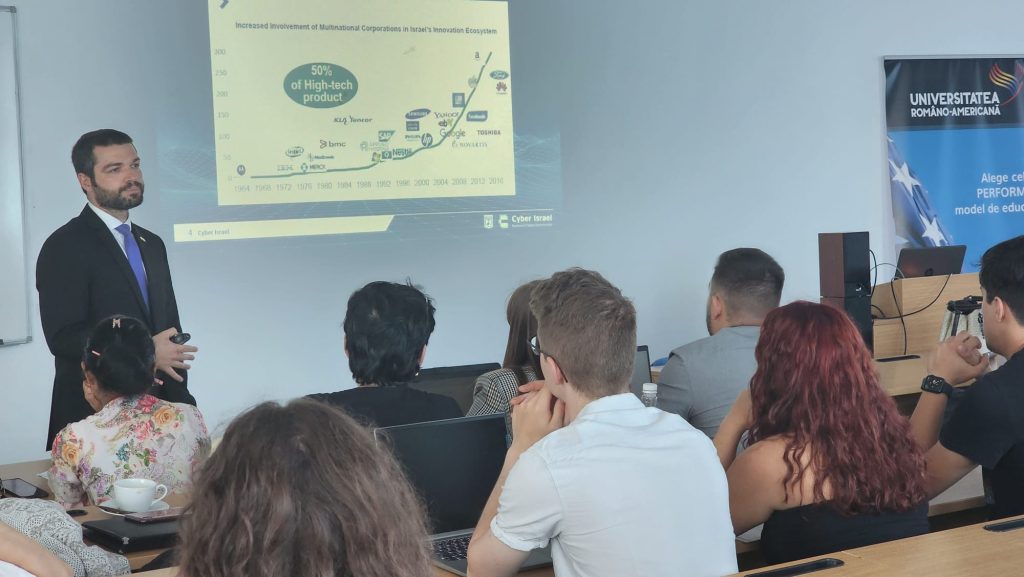
The Summer School on Cyber-Crime & Cyber-Security (3CS) is organized by the Centre for Human Rights and Migration, under the auspices of the RAU’s School of Law, and will take place at the Romanian-American University between 1st and 9th of July 2023.
During the Summer School there are approached practical challenges such as:
- Individual rights and freedoms in the Internet space (human rights, digital rights, universal rights)
- Cybercrime & cyber-security (concepts, modus operandi, and consequences)
- Specific types of online illegal actions (crimes, benefits, and trends)
- Cybercrimes and their impact on global society (disinformation, violent extremism, cyber-war)
- Crypto and anti-money laundering
- Vulnerable groups and vulnerabilities (children, religious groups, refugees)
The Summer School will cover a broad range of topics such as online identity construction, disinformation, hate speech and online harassment, online sex crimes, online frauds, illegal markets online, cyberwarfare, cyberterrorism and “political deviancy”, approaches to prevent and counter cybercrimes and the future of cybercrimes. It will bring together researchers and professionals at the cutting edge of cybersecurity to share their knowledge with the participants.
The Program also offers the opportunity for networking and cultural activities – few touristic objectives in Bucharest will be visited and a trip to Dracula Castle or Danube Delta will be organised, based on the interest of the participants.
Who can participate?
Students in law, security studies, political sciences, economics, social sciences and other related areas are strongly invited to attend the 10-days Summer School (3 ECTS) in Bucharest, Romania.
It is not required to have specific prior knowledge in the field. As an interdisciplinary summer school, all courses will be aimed at beginners in the area.
English speaking students who are interested in better understanding cybercrime and cyber-security are welcome to apply before 1st of June 2023.
Credits offered: 3 ECTS (European Credit Transfer and Accumulation System)
Fees information:
- There is no fee for students.
- EUR 20/night accommodation in our on-campus student hostel, placed in a double room (EUR 40/night for a double room). The hostel is inside the campus and there are also different meal options available close-by (inside the hostel is a cafeteria, there are 3 other restaurant/cafeterias in a range of 5 minutes-walk from the school).
For EU/EEA students: participants may receive 70 EUR/day for their transportation, accommodation, and food in Romania from their university’s ERASMUS Office budget (please check with your ERASMUS office the availability of such a financial support). So, each student should receive EUR 630 for 9 days in Romania.
REGISTRATION DEADLINE:
Registration should be done before 1st of May, by filling-in the online form HERE.
More information about the current 3CS edition, along with the official Agenda, is available here.
Summer School coordinator: Silvia Tăbușcă, Ph.D. – Director, Center for Human Rights and Migration (CDOM), [email protected]
Photo Gallery